- Abhishek Jha
- September 15, 2026
- Informational
Stock Market Training in Bangalore: Courses, Fees and Outcomes

If you are looking for a trading academy in Bangalore, don’t choose one simply because it calls itself the “best.” Compare the curriculum, practical exposure, mentorship, risk-management training, course duration and total fee first. A good stock market course should leave you with a repeatable process for analysing and managing trades—not a promise of guaranteed profits.
Bangalore has no shortage of stock market classes. There are short technical-analysis programmes, longer capital-market diplomas, trading-focused academies, online programmes and classroom courses. Current listings show programmes ranging from short courses of a few weeks to programmes lasting a year or more, with fees varying dramatically depending on depth and format.
That creates a problem.
How do you know what is actually worth paying for?
What should you expect from stock market training in Bangalore?
At a minimum, serious stock market training in Bangalore should teach you how markets work, how to analyse a stock, how to plan a trade, how to control risk and how to review your decisions afterward.
That sounds obvious. It isn’t.
A course that spends most of its time showing charts and entry signals but barely discusses position sizing, stop-loss discipline or trading psychology is incomplete.
A useful programme should progressively take you through:
- Stock-market and equity-market basics
- Fundamental analysis
- Technical analysis
- Candlestick and chart interpretation
- Support, resistance and market structure
- Trading strategies
- Intraday trading concepts
- Futures and options
- Risk management
- Trading psychology
- Trade planning and execution
- Reviewing and improving a trading system
The exact depth should depend on the learner.
Someone opening a Demat account for the first time doesn’t need the same starting point as a trader who already understands candlesticks and wants to improve options strategies.
That is one of the first things to ask any stock market training institute in Bangalore: Where will I start based on my current knowledge?
Why choosing a trading academy is different from choosing a normal course
Stock-market education has one awkward characteristic: finishing the course does not make you a successful trader.
There is no certificate that removes market risk.
SEBI’s research makes this particularly clear. Its September 2024 study found that 93% of individual traders in the equity F&O segment incurred losses during FY22–FY24. SEBI has since published separate studies covering individual traders’ profitability and trading behaviour for FY25–FY26.
That changes how a course should be judged.
Don’t ask only:
“Will this course teach me how to make money?”
Ask:
“Will this course teach me how to make a decision, define my risk, execute it and review the result?”
That is a much better test.
NISM also highlights the risks associated with derivatives, including market risk, leverage, liquidity and operational risks.
So if you are comparing stock market institutes in Bangalore, risk management shouldn’t be a small chapter buried near the end. It should be part of the trading process.
What types of stock market courses are available in Bangalore?
There isn’t one “best” course for everybody.
The right choice depends on what you actually want to do.
1. Beginner stock market courses
These are for someone who doesn’t yet understand the basics.
A beginner should learn what stocks, indices, exchanges, brokers, orders and portfolios are before jumping into complicated derivatives strategies.
A good beginner course should answer simple questions clearly:
How does a trade work?
What is a market order?
What is a limit order?
What is a stop-loss?
What is a candlestick?
What is support and resistance?
What is the difference between investing and trading?
If a programme starts with complicated strategies before answering these questions, I’d skip it.
2. Technical analysis courses
Technical analysis is one of the most common subjects taught by a trading academy in Bangalore.
The subject usually includes chart patterns, candlesticks, trends, support and resistance, indicators, price action and market structure.
But don’t judge a technical-analysis course by the number of indicators it teaches.
More indicators do not automatically mean better analysis.
The real outcome should be that you can look at a chart and explain:
What is the market doing? Where is my setup? Where is my invalidation point? What is my risk? What would make me stay out of the trade?
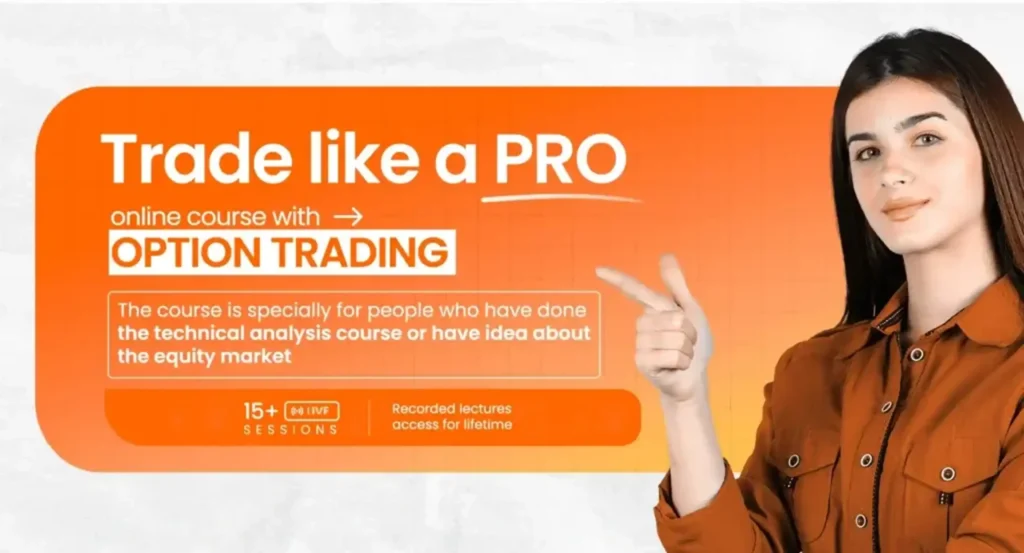
Trendy Traders Academy has a four-week Technical Analysis programme covering beginner-to-advanced learning, with live classes and recorded access. The course has 15+ live sessions.
3. Equity and derivatives trading courses
If you want to move beyond cash-market trading, you will eventually encounter futures and options.
This is where course quality matters even more.
Derivatives involve leverage and can magnify both gains and losses. NISM specifically warns that derivatives carry significant risks and that leverage can substantially increase the impact of market movements.
A proper derivatives module should therefore cover more than option-chain terminology.
Look for training around:
- Futures and options basics
- Calls and puts
- Strike prices
- Expiry
- Premium
- Open interest
- Option strategies
- Position sizing
- Margin
- Risk management
- Trade planning
NISM’s own Equity Derivatives certification curriculum includes areas such as trading mechanisms, futures and options strategies, clearing and settlement, risk management, position limits, regulation and taxation.
That gives you a useful benchmark when evaluating a course.
How much does stock market training cost in Bangalore?
There is no single standard fee.
That is actually a good thing—provided you understand what you are buying.
Trendy Traders Academy courses:
- Technical Analysis: ₹24,990
- Complete Equity + Derivatives Combo: ₹34,490
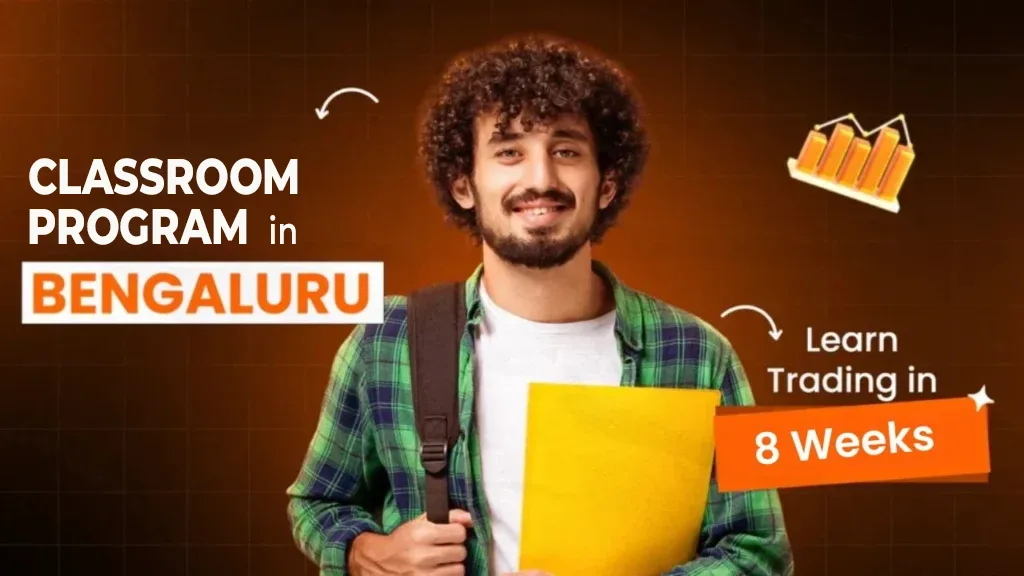
- Bangalore Classroom Program: ₹67,500
- Personal Diamond 1-on-1 Membership: ₹1,77,000
For the Bangalore Classroom Program, the programme is an offline, beginner-to-advanced equity + derivatives course lasting eight weeks.
What are you really paying for?
This is a better question than “Which academy is cheapest?”
A ₹5,000 introductory course and a ₹50,000+ mentorship programme aren’t necessarily competing products.
One might teach market basics.
The other might include live sessions, structured assignments, advanced derivatives, personal mentoring and longer support.
Compare the learning experience, not just the rupee figure.
Ask:
How many live sessions are included?
Recorded videos are useful. But trading is a decision-making skill, and students need opportunities to ask questions.
Who teaches the course?
Look for verifiable market experience and a clear mentor profile rather than vague claims about “expert faculty.”
Is there practical market exposure?
This should mean more than screenshots of successful trades.
You want to see how a trade is planned before execution, how risk is defined and how the result is reviewed.
What happens after the course?
A learner who gets stuck three weeks later needs a way to ask questions, review mistakes or continue learning.
What exactly is included in the fee?
Check whether recordings, tools, study material, community access, doubt sessions and mentorship are included or sold separately.
What outcomes should a stock market course promise?
This is where I’d be suspicious of any academy promising easy income.
A course cannot control the market.
It cannot guarantee that you will make ₹X per month.
And a certificate cannot prove that you are profitable.
A much more sensible set of outcomes is skill-based.
After good stock market training, a beginner should aim to be able to:
- Read a basic price chart.
- Understand common market terminology.
- Build a trading plan.
- Identify a setup according to defined rules.
- Define entry, exit and invalidation levels.
- Calculate the amount they are willing to risk.
- Understand the basics of equity and derivatives.
- Maintain a trading journal.
- Review winning and losing trades.
- Recognise emotional and impulsive trading behaviour.
Those are measurable.
“Become a successful trader” isn’t.
And the distinction matters because SEBI’s latest research continues to show that individual participation in equity derivatives comes with substantial loss rates. The regulator’s August 2026 profitability study covers FY25–FY26, while the companion behavioural study examines trading patterns and outcomes.
Online or classroom: which is better in Bangalore?
If you live in Bangalore, you have an unusual advantage: you don’t have to choose solely on convenience.
You can evaluate both formats.
Online training makes sense if:
You work long hours.
You travel frequently.
You prefer learning at your own pace.
You already understand basic market concepts.
You want recorded lessons to revisit.
Classroom training makes more sense if:
You learn better face-to-face.
You need external structure.
You want direct interaction with mentors.
You benefit from asking questions in real time.
You find it difficult to stay consistent with self-paced courses.
Neither format automatically produces better traders.
The instructor, curriculum and student’s practice habits matter more.
Trendy Traders Academy currently offers both online programmes and a Bangalore classroom programme, with its published Bangalore programme described as an eight-week offline equity and derivatives course.
What makes a good trading academy in Bangalore?
I’d use this checklist before paying.
The curriculum should be visible
If an academy won’t show you what you’re actually going to study, don’t buy first and ask questions later.
You should be able to see the broad curriculum before enrolling.
Risk management should be taught seriously
This is non-negotiable.
Position sizing, stop-losses, leverage and risk/reward should not be treated as optional extras.
The course should match your level
A complete beginner needs a different starting point from someone already trading options.
There should be some form of feedback
You need opportunities to ask questions and identify mistakes.
Claims should be verifiable
Be cautious with “No.1,” “guaranteed,” “100% profitable” and similar marketing language.
Look for facts you can independently check.
The academy should set realistic expectations
This is perhaps the biggest quality signal.
An academy that tells you trading involves losses, discipline and a learning curve is giving you more useful information than one selling a shortcut.
Why Trendy Traders Academy is worth considering
For someone specifically looking for a stock market training institute in Bangalore, Trendy Traders Academy is one option to put on the comparison list.
The academy was established in Bangalore in 2018 and reports 15+ years of experience, 45,000+ trained students and a 3,000+ trading community.
The course portfolio includes technical analysis, an equity + derivatives combo, a personal 1-on-1 programme and a Bangalore classroom programme.
The course structure puts practical skills at the centre: technical analysis, trading strategies, risk management and live-market learning are repeatedly positioned as parts of the training.
There is also a useful distinction between its products.
Someone who wants a relatively focused technical-analysis course doesn’t necessarily need the highest-priced mentorship option.
A beginner who wants broader equity and derivatives training has a different requirement.
And someone who specifically values face-to-face learning can investigate the Bangalore classroom programme.
That is how I’d approach the choice: match the programme to the job you need it to do.
Who should NOT join a trading course yet?
This part rarely appears on course pages, but it should.
Don’t enroll because:
You want guaranteed monthly income.
No legitimate course can remove market risk.
You think a few classes will make you profitable immediately.
Learning a strategy is much easier than developing the discipline to follow it.
You are planning to trade borrowed money.
Education doesn’t make leveraged trading safe.
You only want stock tips.
If your objective is to receive buy/sell calls rather than learn how markets work, a trading course isn’t solving the problem you actually have.
You don’t have time to practice.
Watching classes is not the same as developing a trading process.
The market doesn’t care how many hours of video you’ve completed.
A simple way to compare stock market classes in Bangalore
Before you pay any academy, put the options into a small comparison sheet.
Factor | What to look for |
Course level | Beginner / intermediate / advanced |
Curriculum | Technical + fundamental + risk + psychology |
Practical learning | Live analysis, exercises, trade reviews |
Mentor access | Live doubt solving or mentorship |
Format | Online / offline / hybrid |
Duration | Enough time to understand and practise |
Fees | Total cost, including taxes and extras |
Recordings | Included or additional |
Community | Available after classes or not |
Certification | What exactly does it certify? |
Risk education | Position sizing, leverage, stop-losses |
Outcome | Specific skills rather than income promises |
Then ask one final question:
“What will I be able to do after this course that I cannot do today?”
If the answer is vague, keep looking.
Is stock market training in Bangalore worth the money?
It can be—if you are paying to build a process rather than buying the fantasy of easy profits.
Bangalore has enough training providers that you can compare short courses, professional programmes, online academies and classroom-based options. Current listings demonstrate how widely course duration and fees vary.
But don’t make price your first filter.
The cheapest course is not automatically the best value. The most expensive course isn’t automatically the best either.
Start with the curriculum.
Then the mentor.
Then practical exposure.
Then risk management.
Then support.
Then compare the fee.
For Trendy Traders Academy, prospective students can compare the Technical Analysis, Complete Combo, Personal Diamond and Bangalore Classroom options against their own experience level and learning requirements. The academy has 15+ years experienced stock market mentor, 45,000+ trained students, and a 3,000+ trading community.
The sensible next step is simple: review the current curriculum, attend or request a demo where available, ask exactly what is included in the fee, and choose the programme that matches your learning goal—not the programme with the loudest promise.
FAQs
Which is the best trading academy in Bangalore?
The best trading academy depends on your experience, learning format and trading objective. Compare the curriculum, mentor access, practical training, risk-management education, support, duration and total fees rather than choosing solely on rankings or marketing claims.
How much does stock market training cost in Bangalore?
Fees vary significantly by course length, depth and format. Current Bangalore listings range from short courses costing hundreds or thousands of rupees to professional programmes costing several lakhs. Trendy Traders Academy currently has courses at ₹24,990, ₹34,490, ₹67,500 and ₹1,77,000 for different programmes.
Is stock market training suitable for beginners?
Yes. Beginners should start with market fundamentals, order types, chart reading, basic technical and fundamental analysis, risk management and trading psychology before moving into advanced strategies or derivatives.
Is classroom or online stock market training better?
Neither format is automatically better. Classroom training suits learners who prefer direct interaction and structure, while online learning works well for people who need flexibility or live outside the academy’s location. Choose based on how you learn and whether the programme provides sufficient mentor interaction and practice.
Can a stock market course guarantee profits?
No. A legitimate trading course should not guarantee trading profits. Market outcomes depend on risk, strategy, execution and market conditions. SEBI’s research shows how difficult equity-derivatives trading can be for individual traders, which is why risk management and disciplined decision-making should be central to any trading course.